
Quick summary
14-Days Omo River Rafting and South Omo Valley Tribes is a 14 days tour in Ethiopia via the Ethiopia route, starting from USD 3458. See the latest itinerary, inclusions, exclusions, and secure booking options below.
14 days
Ethiopia
USD 3458
Kitano Tours & Safaris
About 14-Days Omo River Rafting and South Omo Valley Tribes
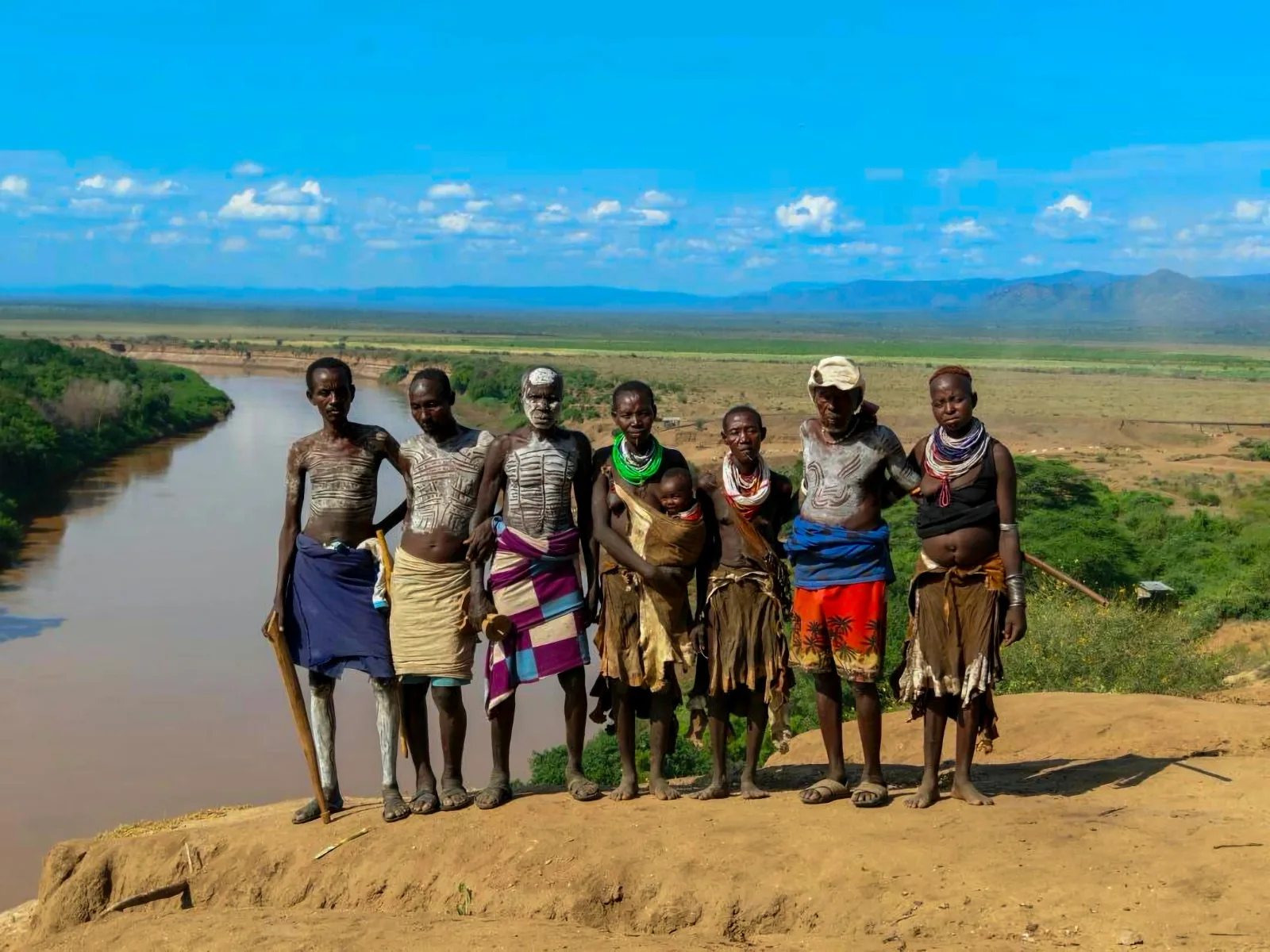
The most rewarding and adventurous white water rafting can be done over the Omo River, which is also a thrilling expedition to reach the Southern Omo Region. The first stage of rafting on Omo is not at all a fun fair ride as this rather gorgeous river has the most rapids with grabbing current and roaring foam. We have a chance to view and interact with the most fascinating, enjoyably fearsome and colorful tribes of Ethiopia, who inhabit on the banks of the mighty Omo River.
- Duration: 14 days
- Route: Ethiopia
- From: USD 3458
Highlights for 14-Days Omo River Rafting and South Omo Valley Tribes
Day 1: Arrive and City Tour
Day 2: Drive to Jimma
Day 3: Drive to Mizan Teferi
Day 4: Drive Mizan Teferi to Kibish
Day 5: Visit Kibish the Suri Tribes
Day 6: Drive to Omo National Park
Day 7: Rafting on Omo River
Day 8: Rafting on Omo River
Day 9: Rafting on Omo River
Day 10: Rafting On Omo River
Day 11: Rafting on Omo River
Day 12: Visit around Turmi
Day 13: Drive to Aribaminch
Day 14: Drive to Addis Ababa and Departure
Itinerary overview
| Day | Title |
|---|---|
| Day 01 | Arrive and City Tour |
| Day 02 | Drive to Jimma |
| Day 03 | Drive to Mizan Teferi |
| Day 04 | Drive Mizan Teferi to Kibish |
| Day 05 | Visit Kibish the Suri Tribes |
| Day 06 | Drive to Omo National Park |
| Day 07 | Rafting on Omo River |
| Day 08 | Rafting on Omo River |
| Day 09 | Rafting on Omo River |
| Day 10 | Rafting On Omo River |
| Day 11 | Rafting on Omo River |
| Day 12 | Visit around Turmi |
| Day 13 | Drive to Aribaminch |
| Day 14 | Drive to Addis Ababa and Departure |
Day 01: Arrive and City Tour
>> Up on your arrival at Bole International Airport and you will clear immigration and proceed to baggage claim, after collecting your checked bags pass through the arrivals hall where you will be meet by tour guide or representative, who will assist you with your transfer to your hotel.
A half day guided tour of the Ethnological Museum, with its artifacts and displays of the cultures and handicrafts of Ethiopia's many ethnic groups. At the famous National Museum, with its cultural and archaeological relics, you will visit the famous "Lucy," a 3.2 million-year-old female hominid who was discovered in Ethiopia's Awash Valley in 1974. The open-air market of Addis, the Mercato, is the largest on the continent, and you will take a drive through it. Time permitting; you may also visit Ba'ata Church, also known as Menelik's Mausoleum, one of the oldest of the churches in Addis, built in 1911. It houses beautiful paintings and the royal tombs of past emperors, including Emperor Haile Selassie.
- Time: 8-10Hrs
- Meals: All meals included Drinking water (Other drinks not included)
Day 02: Drive to Jimma
>> Today you head off in 4WDs towards to the south-west into the Oromo region. Passing by Weliso Maryam church, known for its healing holy water. Drive towards the Gibe River gorge before reaching Jimma. This is the beginning of the Kaffa region which stretches south of the city and it believed to be the home of the Arabica coffee bean. It remains Ethiopia's main coffee growing area and many farmers still make their living from the coffee plantations which dot the landscape.
- Time: 8-10Hrs
- Meals: All meals included Non-alcoholic drinks
- Accommodation: Awetu Grand Hotel Mid-range hotel located in Jimma (Town)
Day 03: Drive to Mizan Teferi
>> You start early in the morning with a visit to King Jaffa's tin castle overlooking Jimma before driving further South West. Here you enter the heart of the Kaffa region where Kaffa and Bentch agriculturalist live. The latter are known for applying elaborate murals to the exterior of their houses. Stop for lunch in Bonga before passing by the Wush Wush Tea plantation and finally reaching Mizan Tafari where you spend the night.
- Time: 8-10Hrs
- Meals: All meals included Non-alcoholic drinks
Day 04: Drive Mizan Teferi to Kibish
>> This morning you get up early and take a walk in a traditional Bentch village. Then head out passing through the Bebeka Coffee plantation - the largest in Ethiopia. Heading further south, you reach Dimma, an important transport hub for Suri and Nuer people. From here you enter Suri territory which is surprisingly lush and contains several ecological zones important to Suri lifestyle. You descend into the Kibbish area where (we hope) we spend the next three nights camping at the small village of Regia.
- Time: 8-10Hrs
- Meals: All meals included Non-alcoholic drinks
- Accommodation: Budget camping
Day 05: Visit Kibish the Suri Tribes
>> Spending the day in the area. There is an option to take a walk to Magologne Holy Water and visit a few villages en-route. You will perhaps meet Arbula a former master of Sagine (stick fighting). Sagine takes place when food is plenty and rain is scarce. Several teams from different villages compete against each other and the competition culminates in announcing an overall master. If you are lucky you may witness one of the fights. To Western observers it may appear harsh, but this ritualized form of violence is an essential component of Suri cultural practices.
- Time: 8-10Hrs
- Meals: All meals included Non-alcoholic drinks
- Accommodation: Budget camping
Day 06: Drive to Omo National Park
>> This morning you say goodbye to your hosts and drive through Nyangatom territory on a rough dirt road after which you enter the remote but beautiful Omo National Park. You look out for game as you drive towards the park's headquarters at Mui. On arrival, there should be time for a wash and perhaps a drive to the grazing land of the Nyangatom people, a hot spring area and perhaps spot a few antelope species.
- Time: 8-10Hrs
- Meals: All meals included Non-alcoholic drinks
- Accommodation: Budget camping Inside Omo NP (Lower Omo Valley)
Day 07: Rafting on Omo River
>> This morning you pack and prepare for your 4-day river trip. Your main luggage will remain in the vehicles and you take only minimal belongings with you on the water. Driving deeper into the heart of the park, you finally reach the Omo River which forms the boundaries between Omo National Park and Tama Wildlife Reserve. Today you say goodbye to your cars and drivers and meet your boat captains and rafts which will provide all your transport needs over the next 4 days. Provided that the people have not moved on, you may be camping next to a Mursi village tonight.
- Time: 8-10Hrs
- Meals: All meals included Non-alcoholic drinks
- Accommodation: Budget camping Inside Omo NP (Lower Omo Valley)
Day 08: Rafting on Omo River
>> Finally your river journey starts in earnest... On your sturdy inflatable rafts with outboard motors, this journey is distinctly "brown-water" and the adrenaline rushes will come from the experience of being on the river and stopping by villages, rather than the surge of the waters. As you slowly make your way down the Omo River there will be plenty time to take in the scenery and indulge in the remoteness of this amazing region. Several ethnic groups inhabit this area and the itinerary is left intentionally free to allow maximum flexibility in this most unpredictable part of the country. The area you travel through today is dominated by the Mursi people who are culturally and linguistically interlinked to the Suri - both known for their lip plates.
- Time: 8-10Hrs
- Meals: All meals included Non-alcoholic drinks
- Accommodation: Budget camping Inside Omo NP (Lower Omo Valley)
Day 09: Rafting on Omo River
>> Continuing your rafting downstream, we hope to meet members of the Mugugi ethnic group along the river. Further downstream, you now enter the Nyangatom cultural sphere; another semi- nomadic pastoral society. Known to their enemies by the derogatory term 'Bume' (the smelly ones), the Nyangatom are proud cattle-herders. Cow's blood and milk form a major part of their diet and they are traditionally known for body scarifications and elaborate hairstyles symbolizing achievements in fights.
- Time: 8-10Hrs
- Meals: All meals included Non-alcoholic drinks
- Accommodation: Budget camping Inside Omo NP (Lower Omo Valley)
Day 10: Rafting On Omo River
>> Today is your final day on the river and depending on where you spent last night, you may get to take a walk in a Kara village this morning. The villages are located on the Eastern river bank. The Kara people number a mere 1500 and are culturally interlinked to the Hamer who dominates this part of the lower Omo Valley. After your visit you'll continue on a short journey to Murelle Camp where you say goodbye to your boat captains and will be met by your drivers, vehicles and main luggage. You make camp for a final night and get to look back with a sense of achievement on the past 4 days on the river.
- Time: 8-10Hrs
- Meals: Meals at own expense Drinks not included
- Accommodation: Budget camping Inside Omo NP (Lower Omo Valley)
Day 11: Rafting on Omo River
>> You begin the morning with a walk in the bush dotted with acacia and desert rose trees before heading into Turmi, a small town and the center of Hamer culture. Then you will drive 73 km west to visit the Dassench /Geleb/ people; who inhabited in the bank of Omo River and we cross the Omo River by locally made boat to see the village these people are semi nomadic with very little agriculture on the bank of the Omo River. You will drive back to Turmi in the afternoon. It should be noted that this part of Southern Ethiopia is far more visited than the region you have just left behind. After many nights of camping you have a chance to unwind at a local Lodge.
- Time: 8-10Hrs
- Meals: All meals included Non-alcoholic drinks
Day 12: Visit around Turmi
>> Turmi is a small Hamer people town, the Hamer are one of the most known tribes in Southern Ethiopia. They inhabit the territory east of the Omo River and have villages in Turmi and Dimeka areas. Tourists visit the hamer hoping to see a traditional annual ceremony called "Bull jumping" it is a ceremony when a boy is pronounced "Man" after proving his capacity to jump 5 up to 13 cattle's stand in a row and the day includes a special event in which a woman shows her appreciation for the bride groom by letting the boys whip them with a stick until they bleed. At night the day is called off after a colorful party with Evangady dance (night dance). If the days are Monday, Tuesday or Saturday we will have a chance to see colorful Market day and as well as Bull jumping ceremony.
- Time: 8-10Hrs
- Meals: All meals included Non-alcoholic drinks
Day 13: Drive to Aribaminch
>> In the morning driving to Arba Minch. On the way stop at Konso to visit the Konso people with their king- UNESCO registered site for their extensive terracing and practice of making a wooden grave mark for their hero and kings. Invariably built on hilltops as protection from the lowland tribes, traditional Konso villages are surrounded by high stonewalls and encompass separate compounds, with outlying terraced agricultural fields. Another highlight is the famous 'Wakas' - a funerary tradition where magnificent carved wooden sculptures were created in honor of Konso warrior heroes who have killed an enemy or animal, and often grouped to represent the man, his wives and his adversaries. After lunch we arrive at Lake Chamo. We get there you will take a boat trip in Lake Chamo, to visit the crocodile market, it is a local name for a place in Lake chamo that the crocodiles went out of the lake and chill, there is no buying or selling, also you will see hippos and different kinds of birds.
- Time: 8-10Hrs
- Meals: All meals included Non-alcoholic drinks
- Accommodation: Paradise Lodge Mid-range lodge located in Arba Minch (City)
Day 14: Drive to Addis Ababa and Departure
>> After breakfast drive to Dorzy village, this people set high up in the Gughe Mountains where we see the traditional Dorzy beehive shaped huts recognized as one of the visually attractive structural houses. After that start driving back to Addis, on the way visit Tiya, is known for the 10th centuries adjacent archeological site, which is distinguished by 36 standing stones or steal "32 of which are engraved with enigmatic symbols, notably swords," marking a large, prehistoric burial complex. The archeological site was designated a World Heritage Site in 1980 also it listed as world heritage by UNESCO. You will arrive in Addis Ababa late afternoon and you will do some shopping for souvenirs. Finally, you will be taken to a farewell dinner depending on your scheduled your international flight; you will be transferred out to Bole International Airport for return back home.
- Time: 8-10Hrs
- Meals: All meals included Non-alcoholic drinks
- Accommodation: No accommodation (End of tour)
Inclusions
- Park fees (For non-residents)
- All activities (Unless labeled as optional)
- All accommodation (Unless listed as upgrade)
- Camping equipment
- A professional driver/guide
- All transportation (Unless labeled as optional)
- All Taxes/VAT
- Roundtrip airport transfer
- Meals (As specified in the day-by-day section)
- Drinks (As specified in the day-by-day section)
Exclusions
- International flights (From/to home)
- Additional accommodation before and at the end of the tour
- Sleeping bag
- Bath towels
- Tips (Tipping guideline US$10.00 pp per day)
- Personal items (Souvenirs, travel insurance, visa fees, etc.)
- Government imposed increase of taxes and/or park fees
- Some meals (As specified in the day-by-day section)

.webp)
.webp)